


Property Management Accounting Services for Self Managing Commercial Property Owners in San Diego

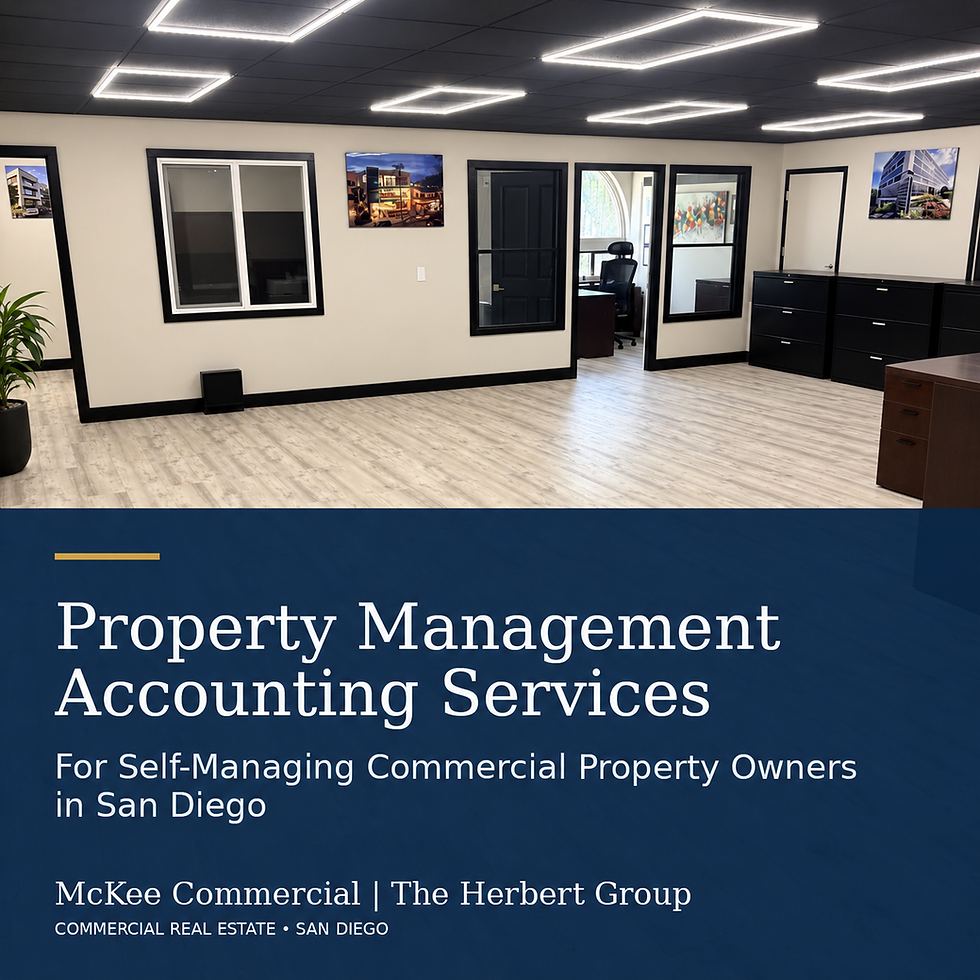
Self managing a commercial property does not mean an owner has to handle every accounting responsibility internally.
Many commercial property owners prefer to stay directly involved with tenants, vendors, maintenance, leasing decisions, and daily property operations while outsourcing the financial administration to an experienced commercial property accounting team.
McKee Commercial | The Herbert Group provides property management accounting services for self managing commercial property owners in San Diego who want accurate financial reporting, organized tenant accounting, professional rent collection, expense tracking, and better visibility into property performance without giving up control of their properties.
What Is Property Management Accounting?
Property management accounting is the process of tracking and managing the financial activity of a commercial property.
This includes rental income, tenant charges, operating expenses, vendor payments, bank activity, budgets, accounts receivable, accounts payable, CAM expenses, and monthly financial reporting.
Commercial property accounting is different from general bookkeeping because it is structured around the financial operations of income producing real estate.
Each property has its own tenants, leases, operating expenses, bank accounts, budgets, reimbursements, and financial performance.
Professional property level accounting gives owners a clear financial picture of each asset.
What Accounting Services Do Self Managing Property Owners Need?
Self managing owners often handle the operational side of their properties successfully but find the accounting side increasingly time consuming.
Accurate records require consistency, organization, and an understanding of commercial real estate operations.
McKee Commercial | The Herbert Group provides accounting support that allows owners to remain in control of their properties while our team handles the financial administration.
Services include rent collection, accounts receivable, accounts payable, monthly financial reporting, property level income and expense tracking, bank reconciliations, budgeting, CAM reconciliations, tenant ledgers, and financial recordkeeping.
Rent Collection and Accounts Receivable
Consistent rent collection is essential to commercial property cash flow.
Property management accounting tracks tenant charges, rent payments, outstanding balances, credits, late payments, and other receivables.
Accurate tenant ledgers provide owners with a clear view of what has been billed, what has been collected, and what remains outstanding.
This level of organization helps owners identify collection issues early and maintain accurate financial records.

Accounts Payable and Vendor Expense Tracking
Commercial properties have ongoing expenses related to maintenance, repairs, utilities, landscaping, janitorial services, insurance, property services, and other operating costs.
Professional accounts payable administration helps ensure invoices are recorded correctly, categorized to the proper expense accounts, reviewed, and paid from the appropriate property account.
Detailed expense tracking also gives owners better insight into where property funds are being spent.
Monthly Property Financial Statements
Owners should have consistent access to accurate financial information.
Monthly reporting provides a clear picture of property income, expenses, cash flow, tenant balances, and overall financial performance.
Reports typically include income statements, balance sheets, general ledgers, rent rolls, accounts receivable reports, accounts payable reports, tenant ledgers, cash flow information, and budget versus actual reports.
Consistent financial reporting allows owners to make decisions based on current property data rather than incomplete records or scattered information.
Property Level Income and Expense Tracking
Property level accounting is especially important for owners with multiple commercial properties.
Each asset should have clearly separated financial records so ownership understands how each individual property is performing.
Tracking income and expenses at the property level gives owners better visibility into operating performance, profitability, capital expenditures, vendor costs, and cash flow.
This information also supports better planning when evaluating improvements, refinancing, leasing decisions, future acquisitions, or the sale of an asset.
CAM and Operating Expense Reconciliations
Common Area Maintenance and operating expense reconciliations are an important part of many commercial leases.
Depending on the lease structure, tenants are responsible for reimbursing ownership for certain property operating expenses.
Accurate CAM reconciliations depend on detailed accounting records throughout the year.
Property management accounting organizes reimbursable expenses, tenant charges, property expenses, and lease related financial information so the reconciliation process is more accurate and easier to administer.
Budget Preparation and Financial Planning
A property budget provides owners with a financial roadmap for the upcoming year.
Accurate budgeting helps ownership anticipate operating expenses, rental income, repair costs, capital projects, and expected cash flow.
Comparing actual results against the budget also helps identify changes in property performance.
Owners gain visibility into rising vendor expenses, changes in rental income, unexpected repairs, operating cost increases, and other financial trends affecting the property.
Bank Reconciliations and Financial Recordkeeping
Regular bank reconciliations are an essential part of accurate property accounting.
The accounting records should match actual banking activity associated with the property.
Reconciliations help identify incorrect entries, duplicate transactions, missing transactions, outstanding payments, and other discrepancies.
Organized property records also make it easier for owners to work with CPAs, lenders, investors, tax professionals, and other financial advisors.
Why Do Self Managing Property Owners Outsource Their Accounting?
Many commercial property owners want to remain directly involved in managing their properties but do not want to spend significant time maintaining accounting systems and financial records.
Outsourcing property accounting gives owners professional financial administration while preserving ownership control over the property.
The benefits include more accurate financial records, consistent monthly reporting, organized tenant accounting, professional rent collection, improved expense tracking, better visibility into cash flow, efficient CAM reconciliations, easier coordination with CPAs, and less administrative work for ownership.
Owners receive the financial information they need while continuing to make the management decisions themselves.
Start With Accounting While Continuing to Self Manage
Not every commercial property owner needs full service property management immediately.
Some owners prefer to communicate directly with tenants. Others have long standing relationships with vendors or want to remain involved in maintenance and leasing decisions.
For these owners, property management accounting is often an ideal starting point.
McKee Commercial | The Herbert Group works with self managing commercial property owners who want professional accounting services without transferring full responsibility for the property.
Ownership remains in control of the property while our team manages the accounting, reporting, and financial administration.
Property Accounting Is Often the Beginning of a Longer Relationship
Many owners first work with McKee Commercial | The Herbert Group specifically for property accounting services.
This gives owners an opportunity to experience how our team communicates, manages financial information, responds to questions, organizes reporting, and handles important property details.
Trust develops through consistent service and accurate financial management.
As an owner's portfolio grows or the demands of self management increase, some accounting clients decide to transition to full service property management.
At that point, they are not hiring an unfamiliar management company.
They are expanding an existing relationship with a team that already understands their property's financial history, tenant accounts, expenses, reporting structure, and ownership expectations.
That existing relationship often creates a smoother transition into full service management.
Why Owners Transition From Accounting Services to Full Service Property Management
Managing a commercial property becomes more demanding as portfolios grow, tenant needs increase, maintenance issues arise, and ownership priorities change.
Some owners eventually decide that the time required to manage the property is better spent on other business or investment activities.
Because McKee Commercial | The Herbert Group already handles the property's accounting, ownership has already developed confidence in our processes and service.
The transition to full service property management becomes a natural next step.
Our team already understands the financial side of the property and expands the relationship to include the operational side as well.

Full Service Commercial Property Management
When an owner decides to move beyond self management, McKee Commercial | The Herbert Group provides comprehensive commercial property management services.
Our services include full service property management, property level accounting, rent collection, tenant communication, vendor management, maintenance coordination, 24 hour emergency maintenance support, lease administration, CAM reconciliations, budget preparation, financial reporting, commercial leasing services, and commercial property sales services.
Owners have the flexibility to start with accounting services and expand into full service property management when their needs change.
Commercial Property Accounting Services in San Diego
Commercial real estate accounting requires more than recording income and expenses.
Property owners need organized tenant records, accurate financial reporting, detailed expense tracking, reliable reconciliations, and a team that understands commercial real estate operations.
For self managing commercial property owners in San Diego, McKee Commercial | The Herbert Group provides property management accounting services designed to improve financial organization while allowing owners to retain control of their properties.
For many clients, accounting services also become the foundation of a long term relationship.
Owners start with the financial side of the property, build confidence in our team, and later expand into full service property management when the timing is right.
Frequently Asked Questions About Property Management Accounting
What is property management accounting?
Property management accounting tracks the financial activity of a commercial property, including rental income, tenant charges, expenses, vendor payments, accounts receivable, accounts payable, bank activity, budgets, and financial reporting.
Do I need full service property management to use property accounting services?
No. McKee Commercial | The Herbert Group works with self managing commercial property owners who want professional accounting support while continuing to manage their own properties.
Why do commercial property owners outsource their accounting?
Owners outsource accounting to improve financial accuracy, reduce administrative work, organize tenant records, strengthen reporting, track expenses, and gain better visibility into property performance.
What is property level accounting?
Property level accounting separates the financial activity of each individual commercial property. This gives owners a clearer understanding of the income, expenses, cash flow, and overall performance of each asset.
What accounting reports should commercial property owners receive?
Property owners typically receive financial statements such as income statements, balance sheets, general ledgers, rent rolls, tenant ledgers, accounts receivable reports, accounts payable reports, cash flow reports, and budget versus actual reports.
Do property accounting clients transition to full service property management?
Yes. Many owners begin with accounting services because they want to continue self managing their properties. As their portfolios grow or management responsibilities increase, some clients transition to full service property management with McKee Commercial | The Herbert Group after trust has already been established.
Looking for Property Management Accounting Services in San Diego?
If you manage your own commercial property but want professional support with rent collection, financial reporting, accounts payable, tenant accounting, CAM reconciliations, budgeting, and property level financial administration, McKee Commercial | The Herbert Group offers an effective alternative to full service management.
Start with the accounting services your property needs today.
As your portfolio grows or your management needs change, McKee Commercial | The Herbert Group is ready to provide full service commercial property management with a team that already knows your property and has earned your trust.


